Your Memory.
Properly Understood.
Worried about your memory, or someone you love? We find out what is really driving the change, and act early, when the most can be done.
We can help with
- Brain fog and poor focus
- Age-related memory change
- Mild cognitive decline
- Menopause-related brain fog
- Thyroid, hormone and B12 causes
- A family history of dementia
Dementia rarely has a single cause
It develops where several influences meet over many years: blood sugar, circulation, inflammation, hormones, sleep, hearing, head injury and more. Leading research suggests nearly half of dementia cases are linked to factors that can be changed. The earlier they are found, the more can be done.
What’s normal, and what’s worth checking
Memory isn’t a single system, so the pattern of change matters as much as the change itself.
Normal ageing
- Forgetting a name, then remembering it later
- Misplacing things now and then
- Words on the “tip of the tongue”
Worth checking
- Forgetting recent conversations or events
- Repeating questions or stories
- Friends or family noticing changes
Seek help promptly
- Sudden confusion or rapid change
- Getting lost in familiar places
- Signs of stroke: call 999
The window for change is early
Dementia usually develops over many years, and the earliest changes are easy to miss. In stages 1 to 4 the brain still has considerable capacity to respond, and that is where our clinic focuses its work.
Memory doesn’t live in the brain alone
How clearly you think and remember depends on three systems working together, and when one falters, the others feel it.
Brain. Blood flow, inflammation, nerve health and brain chemistry.
Body. Blood sugar, hormones, thyroid, gut health, nutrients and sleep.
Mind. Stress, mood, purpose and social connection.
How our approach works →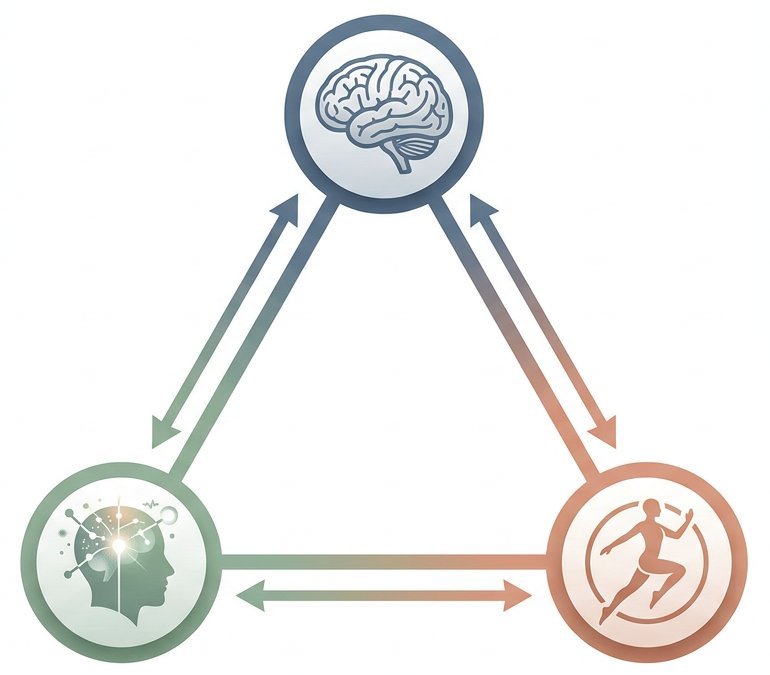
Functional Medicine
Looks for the root causes behind symptoms, from blood sugar and hormones to gut health, nutrition and inflammation, guided by detailed testing.
Functional Neurology
Assesses how specific areas of the brain are performing, through eye movement, balance and cognitive tests, then uses targeted brain-based exercises.
Lifestyle Medicine
Uses the proven pillars of health: sleep, movement, nutrition, stress management and social connection, to protect the brain for the long term.
Three parts, one clear picture
Together they show how your memory and thinking are performing, what may be driving any change, and where you can make the biggest difference.
The MoCA Test
A widely used, validated 10-minute screening test, scored out of 30, giving a clear baseline we can retest over time.
Brain and Body Wellness Analysis
A brain function assessment and symptom profile, with targeted testing of gut, thyroid, adrenal, blood sugar, hormone and immune health.
Lifestyle Analysis
A structured review covering the 14 modifiable risk factors identified by the 2024 Lancet Commission.
Specialist lab tests
Baseline blood chemistry, thyroid, adrenal and cardiovascular profiles, plus advanced tests where your results point to them.
What to expect
Discovery Consultation
- In-depth review of your Memory Profile
- Medical, medication and family history
- Sleep, diet, stress and lifestyle review
- MoCA cognitive screening
Full Consultation
- Your test and assessment results explained
- The key drivers of your symptoms identified
- A personalised brain-health plan
- Nutrition, exercise and sleep guidance
Follow-Up Consultation
- Progress reviewed against your baseline
- Key measures retested over time
- Your plan adjusted as you progress
- Ongoing support and accountability
Alan Lee
Alan Lee is an osteopath and a clinician, educator and researcher in functional medicine and functional neurology, specialising in gut, hormonal and brain-based imbalances. He works alongside GPs and specialists to find and address what is driving changes in memory and thinking.
Trained at: Institute of Functional Medicine · The Kharrazian Institute · Carrick Institute of Neurological Sciences · International Association of Functional Neurology and Rehabilitation · Association of Functional Nutrition and Lifestyle Medicine
More about Alan →“[Patient story: add a real, consented testimonial here.]”
Not sure where to start?
Take the Memory Profile: a structured look at memory, focus, mood, sleep, metabolic and hormonal symptoms. Not a diagnostic test, but a clear place to start.
Questions people ask
Will you diagnose dementia?
No. Any diagnosis must come from your GP or an NHS memory assessment service. We look for the factors driving change and work alongside them.
What happens at the first appointment?
Your Discovery Consultation covers your Memory Profile, medical and family history, a MoCA screening and the tests we recommend for you.
Do you work with my GP?
Yes. We work alongside your GP and specialists, never in place of them, and share results where appropriate.
Can I book for a family member?
Yes. Many enquiries come from a son, daughter or partner. We welcome family members to the consultation, with the patient’s agreement.
How much does it cost?
Discovery Consultation £95 (60 mins) · Full Consultation £175 (90 mins) · Follow-Up Consultation £95 (60 mins). Lab test fees depend on the tests chosen and are agreed with you at your Discovery Consultation.